Bidspirit | автомобильный аукцион Discovery: Unknown Kabbalistic Manuscript from | 27/8/2023 Winner'S
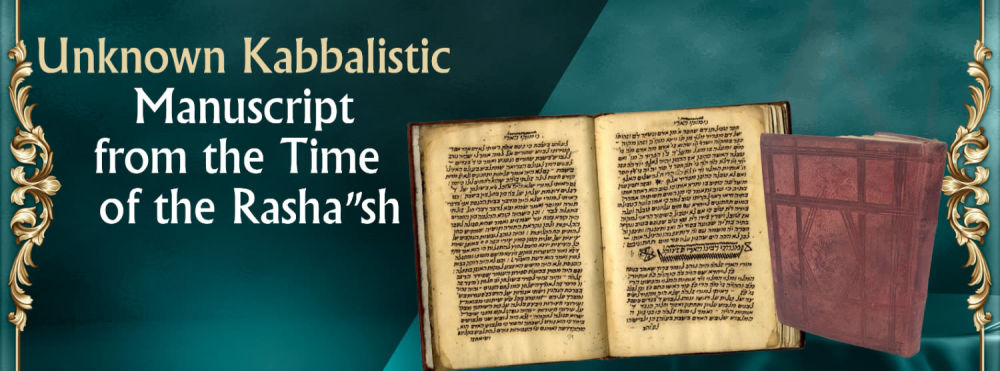
Discovery: Unknown Kabbalistic Manuscript from the Time of the Rasha”sh. Yemen, 18th Century - Thick manuscript comprising two Kabbalistic works per the Ar”i z”l's Kabbalah and an additional, halachic, work. Beautiful clear ancient Yemenite script with titles and with a colophon and an ownership notation. The author's name is hinted to only in the abbreviation לחכ”י. The manuscript demonstrates that he was a G-dly Kabbalist who was expert in the revealed and hidden [aspects of Torah]. Yemen, 18th century. The manuscript has not been examined as befits its significance, and it has apparently never been printed. Manuscript contents: Pages [1-38] 'Ya'ir Nativ' - Kabbalistic rationale for the halachahs of ritual slaughter. Pages [39-66] 'Halachah Pesukah' - halachic rulings on ritual slaughter and examination. Pages [68-128]: 'Metok Lachechi' - The Ar”i's Kabbalah, divided into two parts: 'Segulot L'HaRav HaAr”i' [p. 98]; 'Minhagei Rabbeinu HaAr”i' [p. 106] As stated, this Kabbalist was well-versed both in the Ar”i's Kabbalah and in the revealed Torah - and he even flourishes his pen to mix them together. An important discovery in the Torah of Yemenite Jewry, as there is no other known Kabbalist of such stature from the Rashash's time or thereabouts from the Yemenite exile. The elders of the Yemenite exile themselves wrote, this was due to the fact that they did not want to ascend with Ezra HaSofer in the times of the second Beit HaMikdash because they were intensely involved in their assets. Ezra cursed them with poverty. Rabbi Shlomo Adani, author of Melechet Shlomo , writes about this c. 1600: ”Ezra cursed them with poverty for their entire lives; transgressions cause us to exist in the same exile of Torah poverty and financial poverty!” Indeed, Torah historians maintain that no other Kabbalist of the Rasha”sh's stature was produced by Yemenite Jewry, making this manuscript a significant discovery worthy of investigation. We will emphasize that many mystic manuscripts came from Yemen, but they are generally based on village and Arabic traditions, and deal with sorcery and incantations, not based on the sacred source of the Living Lion. In contrast, this manuscript is almost entirely based on the Ariza”l's sacred words just like those by his contemporary, the sacred Rasha”sh - Rabbi Shalom Sharabi, who people claimed was a gilgul of the sacred Ar”i himself. Incidentally, the identity of the Rasha”sh's Kabbalah teacher in Yemen is unknown to this day. As mentioned above, although the author's name is not noted, it appears that the same author composed each of these three works. He did leave one tiny hint to his name at the beginning of the third work, 'Matok Lechachi' - ”I will start writing this sefer with the help of He Who spoke and the world came into being, and I will use my name in the title, 'Piryo Matok Lechachi' as the Ariza”l requires a person ... to name it for himself.” [128] pp. 13x17 cm. Thick, high-quality paper. Owner's signature in the margins of the first leaf: 'The one who desired it merited to purchase it! None other than Mr. Ben Daoud.' Fine condition. Aging stains. Worming perforations. Yemenite binding.